Ukraine Real Estate Market 2026: Demographics, Security Risk and Reconstruction Capital as the Core Drivers of Value
Published 23 June 2026. Ukraine's 2026 property market is shaped by demographic displacement, security risk and reconstruction capital. A source-anchored analysis of regional polarisation, LUN price data, NBU commentary, the EU Ukraine Facility and where institutional capital can realistically be deployed.
Introduction
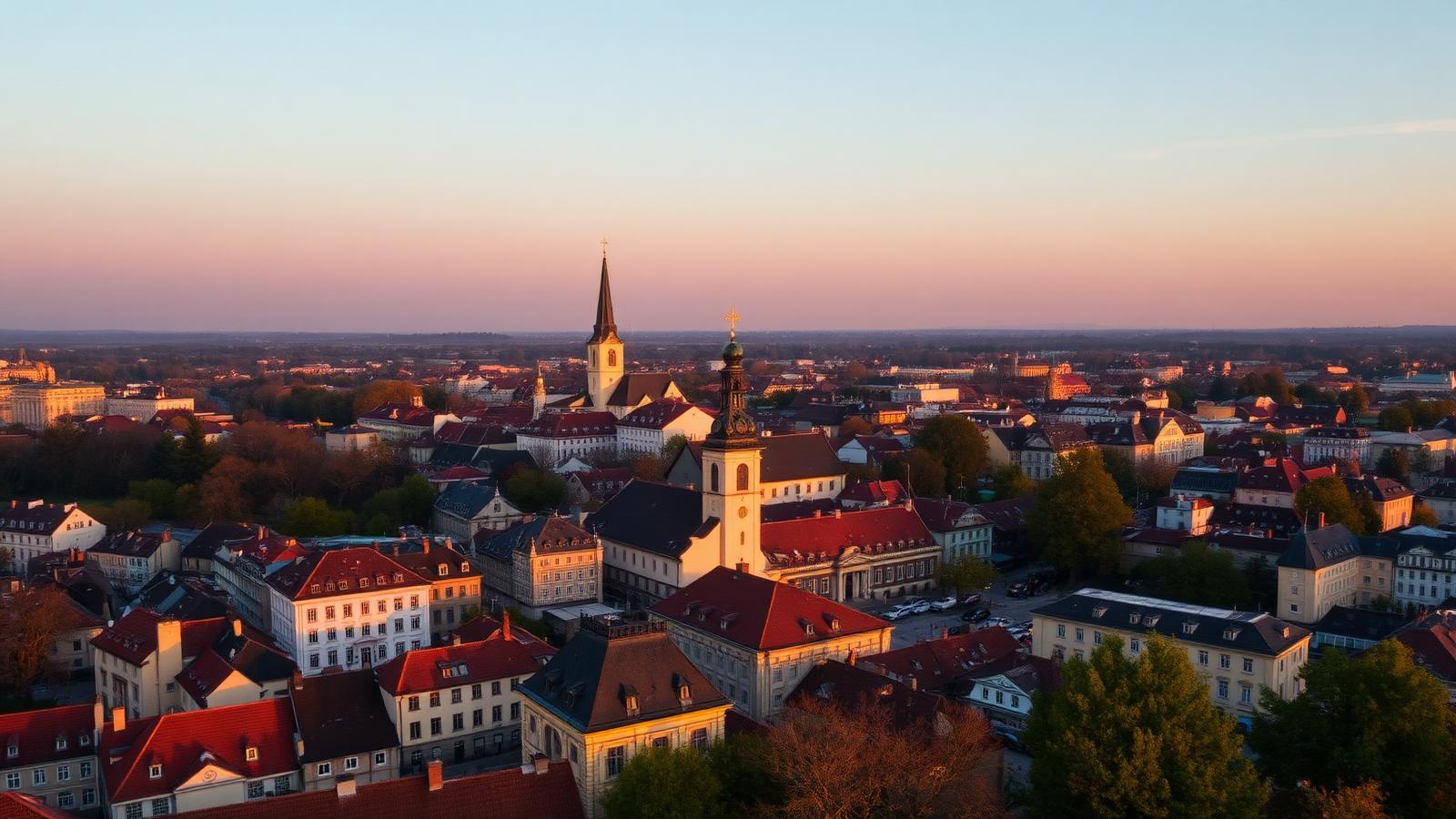
Ukraine's real estate market in 2026 cannot be analysed through the conventional lens of property cycles, interest rates, construction pipelines or short-term price movements alone. Four years after Russia's full-scale invasion, the market is being shaped primarily by three structural forces: demographic displacement, security risk and the allocation of reconstruction capital.
Ukraine remains a market with exceptional long-term recovery potential, but it is also a highly selective and risk-adjusted investment environment. For professional investors, the key question is not only where assets are cheaper than before the war, but where people are likely to live, where businesses can operate, where infrastructure is resilient, and where capital can be protected.
Demographics as the Main Driver of Real Estate Value
The most important structural change in Ukraine's real estate market is the redrawing of the country's demographic map. Population estimates remain uncertain because Ukraine has not conducted a recent full census, part of its territory remains occupied, and migration flows continue to shift. However, available demographic estimates indicate that the population living on government-controlled territory has fallen substantially since the beginning of the full-scale war.
For real estate, this is a first-order issue. Housing demand, rental absorption, retail catchments, office occupancy, logistics demand and municipal infrastructure utilisation all depend on where people actually live, work and intend to remain. Ukraine in 2026 is therefore not a single unified property market. It is a collection of highly differentiated regional markets, with different demographic, security and liquidity profiles.
Refugees, Internal Displacement and Regional Rebalancing
As of 30 April 2026, 4.37 million non-EU citizens who fled Ukraine had temporary protection status in the European Union. The largest host countries were Germany, with approximately 1.28 million beneficiaries, Poland with around 971,000, and Czechia with around 384,000.
At the same time, Ukraine continues to face significant internal displacement. As of January 2026, Ukraine hosted approximately 3.7 million internally displaced people. Since the escalation of the war, more than 4.4 million people have returned from displacement, including more than one million who returned from abroad.
The key real estate implication is that a share of what initially appeared to be temporary displacement has gradually become medium- or long-term settlement. Families have signed longer leases, children have entered local schools, companies have relocated operations, and local labour markets have absorbed new residents. This has strengthened selected cities in western and central Ukraine, especially Lviv, Ivano-Frankivsk, Uzhhorod and parts of the Kyiv metropolitan area.

Regional Polarisation of the Residential Market
The Ukrainian residential market is now highly polarised. Western Ukraine and Kyiv remain the most liquid and investable markets, while cities closer to the front line or exposed to repeated missile and drone attacks face weaker liquidity, higher discounts and limited access to financing.
According to LUN data cited by Global Property Guide, as of March 2026 average advertised primary-market prices were approximately USD 1,360 per square metre in Lviv, USD 1,340 per square metre in Kyiv, USD 1,100 per square metre in Uzhhorod, USD 1,170 per square metre in Odesa and USD 1,080 per square metre in Dnipro.
This confirms that Lviv and Kyiv remain among the most expensive residential markets in Ukraine. However, headline prices should not be interpreted as direct evidence of investment liquidity. In the Ukrainian context, price analysis must be combined with transaction depth, security exposure, building condition, infrastructure reliability, energy resilience and the availability of mortgage or bank financing.
The secondary market also shows strong regional differentiation. In March 2026, average advertised prices for one-bedroom apartments reached approximately USD 72,000 in Lviv and USD 70,000 in Kyiv. Kyiv, Lviv and Uzhhorod remained the strongest secondary-market locations, reflecting the concentration of jobs, businesses, inward migration and relatively safer housing stock.
Market Activity Remains Selective
Despite regional price resilience, Ukraine's housing market should not be described as broadly recovered. The National Bank of Ukraine stated in its December 2025 Financial Stability Report that housing market activity had remained almost unchanged for the previous year and a half. High security risks continued to discourage housing purchases, internal migration was providing less additional demand stimulus, and housing prices were barely rising except in a few western regions.
This is an important distinction for investors. The market is not uniformly rebounding. It is repricing selectively. Safer cities with employment concentration, inward migration and limited quality supply have performed better, while higher-risk locations remain constrained by security, financing and liquidity concerns.
Rental Market: Attractive but Uneven
Rental demand remains strongest in selected western cities and in Kyiv. It is supported by internal displacement, business relocation, labour-market concentration and limited supply of modern rental housing. However, rental yields should be calculated conservatively and on an asset-by-asset basis.
Investors should not rely only on advertised rents. A professional underwriting model should include achievable rent, vacancy, operating expenses, repairs, taxes, currency risk, insurance availability, tenant quality and exit liquidity. In this environment, gross yield assumptions can be misleading unless they are adjusted for security and liquidity risk.
The most credible residential strategies include modern rental housing in cities with durable population inflows, small institutional build-to-rent portfolios, worker accommodation linked to business relocation, and selected residential assets in locations with resilient infrastructure and stable tenant demand.
Kyiv: High Potential, High Security Discount
Kyiv remains Ukraine's political, administrative, financial and business centre. Its long-term recovery potential is significant because of the depth of its economy, institutional role and labour market. However, Kyiv continues to carry a security discount due to missile and drone risk.
In a sustained ceasefire or materially improved security scenario, Kyiv could recover investment momentum relatively quickly. Until then, underwriting assumptions should remain conservative. Investors should apply risk-adjusted assumptions for rent growth, vacancy, cap rates, financing availability and exit liquidity.
Kyiv remains investable, but not on conventional Central European risk assumptions. It requires a specific wartime or post-war investment framework.
Western Ukraine as the Main Beneficiary of Demographic Relocation
Western Ukraine has been one of the main beneficiaries of wartime demographic and business relocation. Lviv, Ivano-Frankivsk, Uzhhorod, Zakarpattia and other western regions benefit from inward migration, proximity to the European Union, business relocation and the growing strategic importance of cross-border logistics corridors.
This does not mean that every project in western Ukraine is automatically attractive. Some price growth reflects supply scarcity and temporary displacement pressure. Long-term investment value depends on employment absorption, local income levels, infrastructure capacity, construction quality, tenant depth and exit liquidity.
The strongest opportunities are likely to be found in rental housing, logistics, light industrial assets, brownfield redevelopment and mixed-use projects with energy resilience.
Commercial Real Estate: Logistics, Warehousing and Energy Resilience
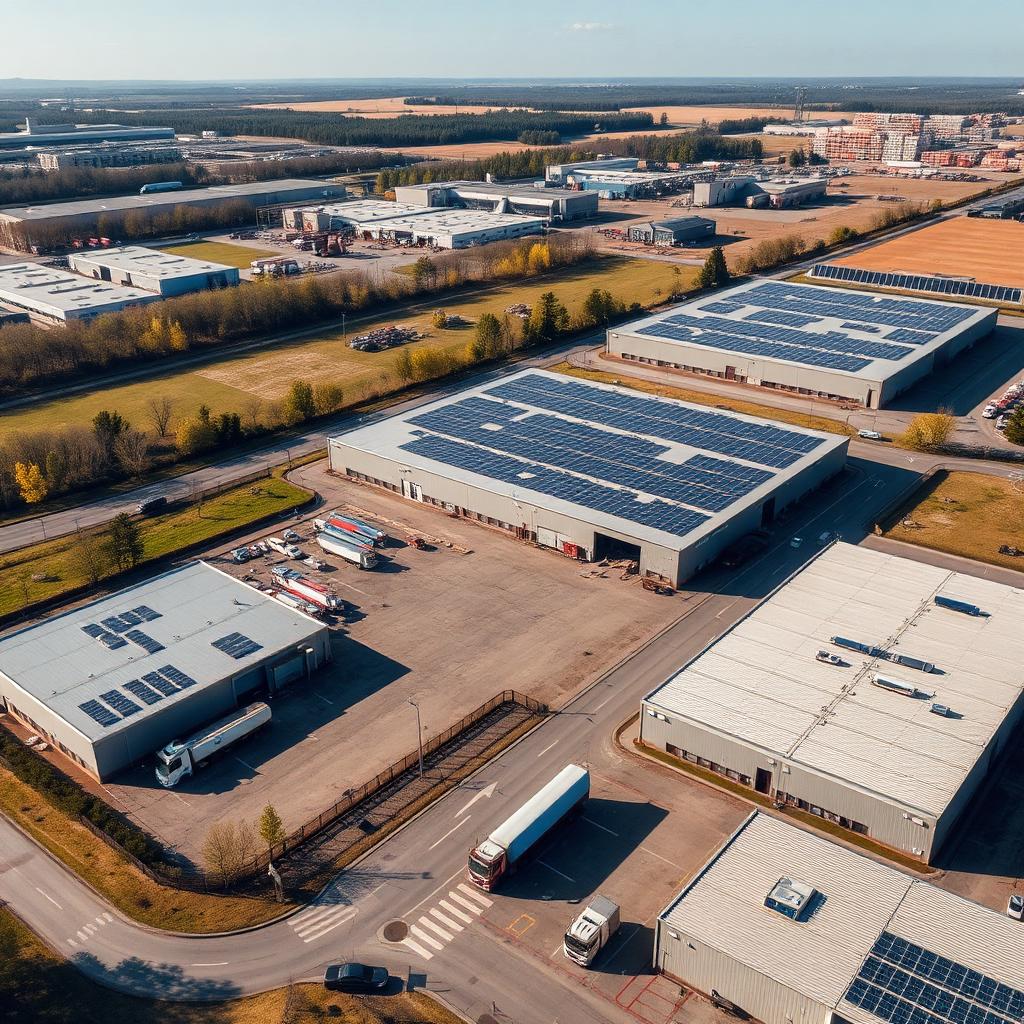
The commercial real estate segment is increasingly driven by operational resilience. Logistics and warehousing remain among the most attractive sectors because of business relocation, supply-chain reconfiguration and Ukraine's integration with EU trade routes.
The National Bank of Ukraine noted that conditions for commercial real estate had improved, with shopping mall turnover increasing, office real estate seeing a slight revival, and logistics infrastructure and warehouses remaining in demand, with low vacancy and slightly increasing rents. At the same time, large shopping malls are not being built because of high security risks, lack of financing and labour shortages.
Energy resilience is becoming a core value driver. Assets equipped with solar power, battery storage, generators, independent heating or other backup systems can command a premium from tenants whose operations depend on continuity of supply. In Ukraine, energy resilience is no longer only an ESG feature. It is an operational and financial necessity.
Reconstruction Needs and the Capital Stack
According to the fifth Rapid Damage and Needs Assessment, released in February 2026 by the Government of Ukraine, the World Bank Group, the European Commission and the United Nations, Ukraine's total recovery and reconstruction needs are estimated at almost USD 588 billion over the next decade. Direct damage is estimated at over USD 195 billion.
The largest reconstruction and recovery needs are in transport, estimated at over USD 96 billion, followed by energy at nearly USD 91 billion and housing at almost USD 90 billion. The World Bank also reports that 14% of Ukraine's housing stock has been damaged or destroyed, affecting more than three million households.
This scale of need does not automatically translate into investable private-sector opportunities. Reconstruction demand is enormous, but institutional capital will focus only on projects with bankable structures, transparent ownership, credible operators, realistic risk mitigation and clear cash-flow visibility.
The EU Ukraine Facility provides EUR 50 billion in stable and predictable financial support for 2024–2027. Within that structure, the Ukraine Investment Framework has a reinforced budget of EUR 9.5 billion designed to attract and mobilise public and private investment for Ukraine's recovery and reconstruction.
For real estate investors, the most important capital sources and risk-mitigation mechanisms include the Ukraine Facility, Ukraine Investment Framework, World Bank Group programmes, IFC financing, EBRD and EIB lending, donor-backed guarantees, and political or war-risk insurance instruments.
Investment Risk and Underwriting Principles
Ukraine offers potentially high risk-adjusted returns, but only for investors with disciplined underwriting and strong local execution capability. The market is not suitable for passive or superficial capital.
Key risks include war risk, infrastructure risk, liquidity risk, currency risk, legal and permitting risk, limited financing availability, labour shortages, construction-cost volatility and uncertain demographic return patterns.
In residential real estate, investors must analyse household income, real rental affordability, tenant quality, mortgage availability and demographic depth. In commercial real estate, the key factors are tenant covenant strength, energy resilience, logistics access, lease enforceability, insurance availability and exit liquidity.
The most important investment principle is to distinguish between reconstruction need and investable demand. A location may require reconstruction, but that does not automatically make it an attractive private-sector investment market. Capital should be deployed where demographic flows, economic activity, security conditions and financing structures support a credible long-term cash-flow case.
Ten-Year Outlook
The most likely outlook for Ukraine's real estate market is continued regional polarisation. Western Ukraine and Kyiv are likely to remain the primary focus for private and institutional capital. Frontline regions and heavily damaged eastern and southern cities will require a longer recovery horizon, greater public-sector support and stronger security guarantees before they become investable at scale.
In an improved security scenario, Kyiv could regain its position as the deepest and most liquid investment market in the country. Western Ukraine may retain part of its wartime demographic premium, especially if relocated households and businesses remain embedded in local economies. Eastern and southern markets will remain more dependent on public reconstruction funding, infrastructure repair and security stabilisation.
Conclusion
Ukraine's real estate market in 2026 is fundamentally a market of demographics, security and selective capital allocation. Physical buildings can be reconstructed faster than population bases, local economies and investor confidence can be restored.
For professional investors, the strongest opportunities are likely to be in logistics and warehousing in western Ukraine, selected rental housing in cities with durable population inflows, energy-resilient mixed-use assets, and commercial properties linked to reconstruction, business relocation and EU supply-chain integration.
Ukraine remains a high-risk market, but also one with exceptional long-term potential. Successful investment will depend on location discipline, conservative underwriting, credible local partners, risk-mitigation instruments and the ability to distinguish real investment opportunities from superficially cheap assets carrying structural risk.
Source references for the article
[1] Eurostat confirms that on 30 April 2026, 4.37 million non-EU citizens who fled Ukraine had temporary protection status in the EU, with the largest groups in Germany, Poland and Czechia.
[2] IOM/UN Ukraine reports that as of January 2026 Ukraine hosted 3.7 million internally displaced people, while more than 4.4 million people had returned from displacement, including over one million from abroad.
[3] Global Property Guide, citing LUN data, reports March 2026 advertised primary-market prices of USD 1,360/m² in Lviv and USD 1,340/m² in Kyiv, and notes strong regional differentiation in primary and secondary residential markets.
[4] The National Bank of Ukraine’s December 2025 Financial Stability Report states that housing market activity had remained almost unchanged for around a year and a half, high security risks continued to discourage purchases, and prices were barely rising except in a few western regions.
[5] The National Bank of Ukraine also reports that commercial real estate conditions improved, shopping mall turnover increased, office real estate saw a slight revival, and logistics and warehousing remained in demand with low vacancy and slightly rising rents.
[6] RDNA5, released by the Government of Ukraine, World Bank Group, European Commission and United Nations, estimates Ukraine’s reconstruction and recovery needs at almost USD 588 billion over the next decade, with direct damage over USD 195 billion and major needs in transport, energy and housing.
[7] The European Commission states that the Ukraine Facility provides EUR 50 billion for 2024–2027 and that the Ukraine Investment Framework has a reinforced budget of EUR 9.5 billion to mobilise public and private investment.