Build-to-Rent: The Asset Class Redefining Residential Investing
Institutional capital is reshaping the residential rental market through purpose-built communities. Inside the operating model, the yield math and the playbook for individual investors to gain exposure to one of the decade's most resilient asset classes.
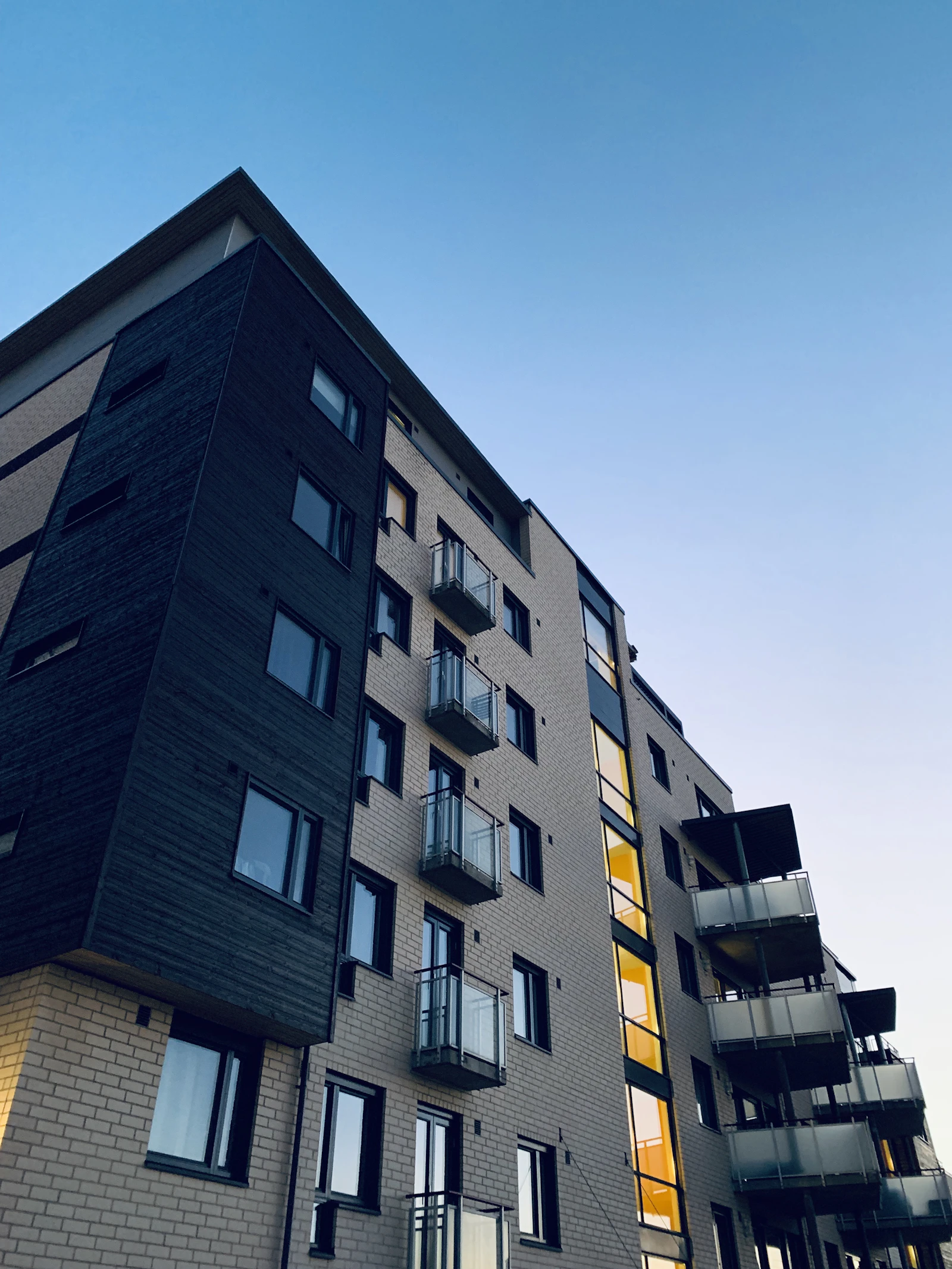
Build-to-Rent (BTR) has moved from a niche institutional experiment into one of the defining residential asset classes of the cycle. Across the UK, the United States, the Netherlands, Germany and Australia, purpose-built rental communities — designed, financed and operated as long-duration income assets from day one — are absorbing tens of billions of dollars of institutional capital each year, and they are quietly outperforming the scattered-site buy-to-let model on virtually every operating metric that matters.
For investors trying to understand where residential is going, BTR is the most important story to follow.
What BTR actually is
Build-to-Rent is not the same as traditional multifamily, and it is not the same as buy-to-let scaled up. A true BTR scheme is designed around the renter as the long-term customer: standardised, professionally managed leases (typically three years with break clauses in the UK, twelve-month renewable in the US), amenity programming (gym, co-working, lounge, package room, sometimes concierge and dog spa), a single owner with a fiduciary capital partner behind them, and an operating platform that handles leasing, maintenance and resident experience in-house. The unit mix, finishes and floor plates are engineered for durability and re-letting speed, not for individual buyer aesthetics.
The yield math
The headline gross yield on a UK BTR scheme typically sits in the 5.0–6.0% range; net yields after a fully loaded operating cost structure (including the platform fee, marketing, voids, repairs, ground rent and reserves) land at 4.0–4.5%. That is below a comparable scattered-site portfolio on paper. The reason institutional buyers still prefer BTR is what the headline number hides:
• Vacancy is structurally lower — typical stabilised BTR operates at 96–98% occupancy versus 90–92% for scattered buy-to-let. • Turnover costs are an order of magnitude smaller — standardised units, in-house maintenance and fast re-letting collapse void periods from weeks to days. • Arrears are materially lower thanks to professional tenant screening and active resident management. • Rental growth tends to outperform scattered comps in the same micro-market because the operator can price dynamically across the building. • Cap-ex is predictable and reserved for, rather than absorbing every windfall.
Net of all of this, levered IRRs on UK and US BTR have consistently delivered 8–11% over 5–7 year holds, with materially lower volatility than office, retail or hotel.
Who is scaling
The UK market is led by Greystar (the largest operator globally), Legal & General, Get Living, Quintain, M&G and Goldman Sachs–backed platforms. In the US, the same names dominate — Greystar, Mill Creek, Bell, Camden — alongside the public multifamily REITs (Equity Residential, AvalonBay, Camden Property Trust). Continental Europe has seen Heimstaden, Vonovia and a wave of pension-fund-backed JVs deploy at scale. Australia's BTR market, until recently almost non-existent, is now seeing Mirvac, Greystar and Sentinel deliver thousands of units a year.
UK BTR completions grew 23% year-on-year into 2026 and the forward pipeline is at a record high, despite — or arguably because of — the planning and rate environment of the last two years.
Why it is outperforming buy-to-let
The scattered buy-to-let model worked beautifully in a 0% rate environment with rising prices and light regulation. None of those tailwinds are still in place. Higher financing costs, tightening EPC and energy regulation, tougher tax treatment for individual landlords and rising compliance burden are squeezing the small-portfolio investor at exactly the moment professional operators are pulling ahead on cost, technology and tenant retention. The result is a structural shift in market share toward BTR that the IMF, ULI and JLL all expect to continue through the decade.
How individual investors gain exposure
Direct ownership of a BTR scheme is, with rare exceptions, off the table for individual investors — minimum equity cheques start at GBP 10–20 million in club deals and far higher in primary funds. The credible routes for individual capital are:
• Listed residential REITs — the simplest, most liquid exposure. Equity Residential, AvalonBay and Camden in the US; PRS REIT and Residential Secure Income in the UK; Vonovia and LEG Immobilien in Germany.
• Specialist BTR funds — open-ended and closed-ended funds from Legal & General, M&G, Aviva Investors and CBRE IM, typically with GBP 100k–500k minimums and 5–10 year lock-ups.
• Syndications and co-investment — increasingly common in the US, where sponsors offer LP positions in single BTR or multifamily assets with USD 50–250k minimums. Diligence the sponsor track record carefully.
• Private debt and preferred equity into BTR developers — currently one of the most attractive risk-adjusted plays, with 9–12% coupons on senior secured paper and 14–18% on preferred equity, while bank construction finance remains constrained.
What to underwrite
For any BTR exposure, the questions to ask are operator quality and platform scale (does the manager have 10,000+ units under operation in the same metro?), the local supply pipeline (is the catchment about to absorb another 3,000 competing units?), planning and regulatory risk (especially rent control), and the capital stack — BTR is particularly sensitive to refinancing risk because cash yield is moderate.
The bottom line
Build-to-Rent is no longer the future of residential — it is the present. Investors who want long-duration, inflation-linked income from housing without the operational drag of scattered buy-to-let now have a deep, liquid, increasingly mature set of tools to gain exposure. In a falling-rate environment with structural housing undersupply across most of the developed world, that combination is hard to beat.